
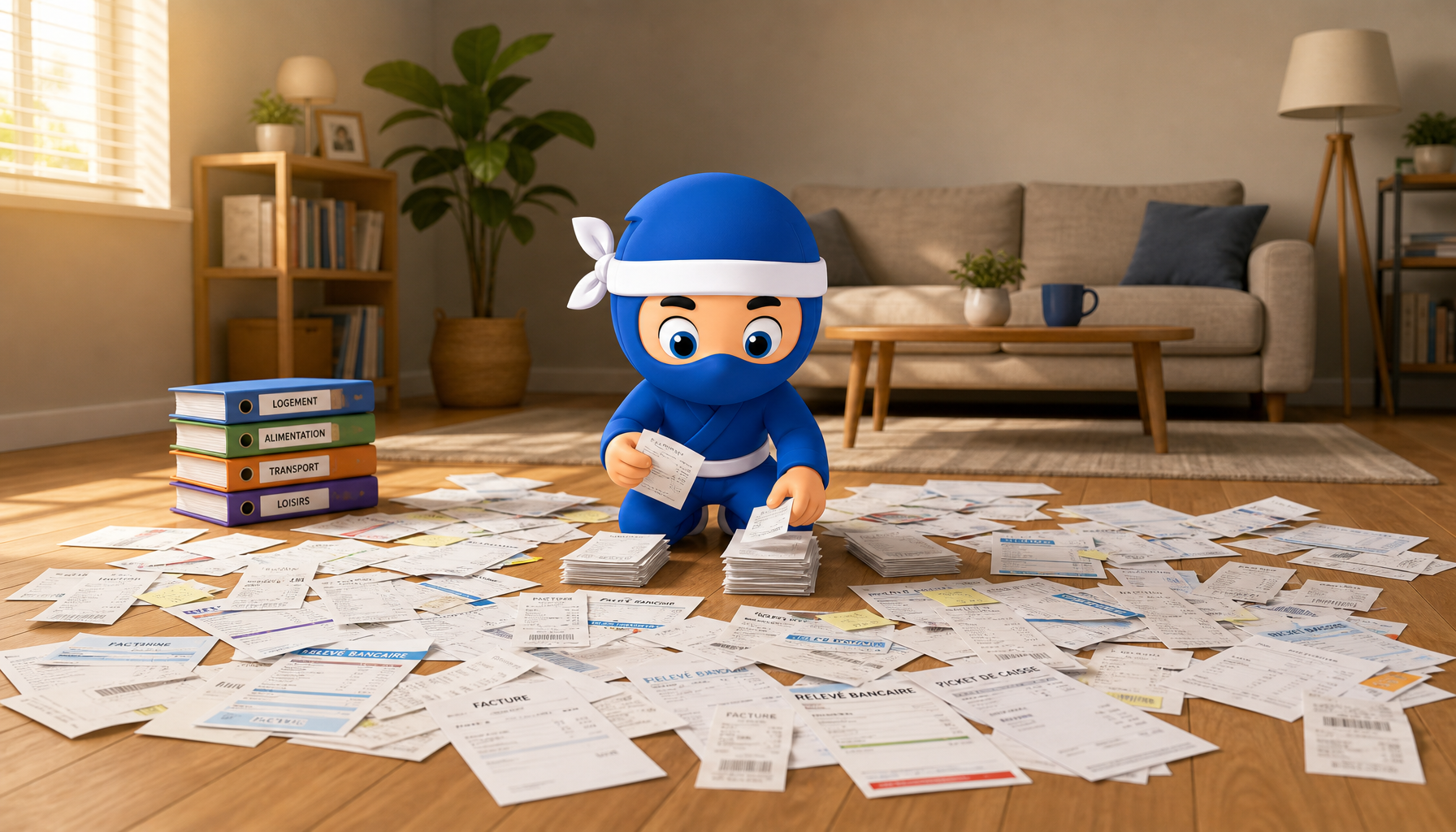
Most budgets fail for the same reason: they describe an ideal life, not a real one. At the first unexpected expense, the discrepancy triggers guilt, and that guilt leads you to avoid the issue rather than correct it.
Another common blind spot: irregular expenses. Clothes, vacations, gifts. They happen every year; they aren’t unpredictable, just irregular. A budget that doesn’t account for them will run a chronic deficit without you understanding why.
The method consists of four steps. Start with your actual net income. Track your expenses for two months before deciding anything. Allocate every euro to a specific purpose, treating savings as a fixed category rather than whatever’s left at the end of the month. Compare actual spending to your budget each month to fine-tune it—not to judge yourself. A budget takes two or three months to stabilize; it doesn’t happen with a single attempt.
To stick with it over the long term, the choice of tool matters. A spreadsheet takes ten minutes a week but keeps you actively engaged with your decisions. The Ninja Budget offers the same structure with an automated dashboard: 15 minutes to get started, 15 euros, a one-time purchase, and your data stored in Google Drive.